Building a Crossout vehicle that survives
Most beginner builds are not lost to a lack of firepower. They are lost to weight, to an exhausted energy pool, or to a weapon mounted where anyone could shoot it off. Here is the order in which to make the decisions.
How this page is paid for
solaten.online is an independent guide, and it is funded by advertising. Buttons and links marked partner link lead to the official Crossout website through an affiliate network. If you register there after following one, the publisher of this site may be paid a commission. You pay nothing extra, and the commission has no influence on what we write — see our editorial policy.
We are not the game's publisher. This site is not affiliated with, endorsed by or sponsored by Targem Games, Gaijin Entertainment or any related company.
Start with the cabin, not the gun
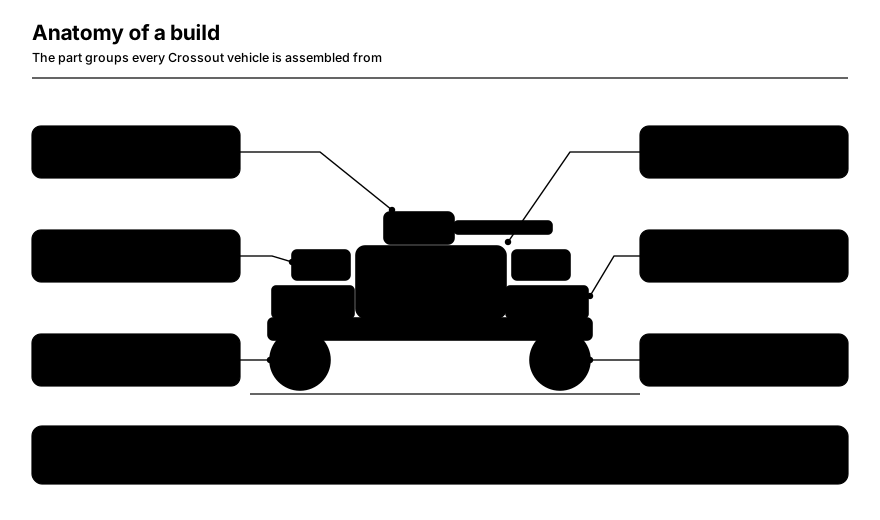
The cabin decides three things before you have mounted anything else: how much energy you have to spend, how much mass you can carry, and how the vehicle will feel to drive. Light cabins tend toward speed and less carrying capacity; heavy cabins toward the reverse. Choosing the weapon first and then hunting for a cabin that can support it is the long way round.
Then spend the energy pool deliberately
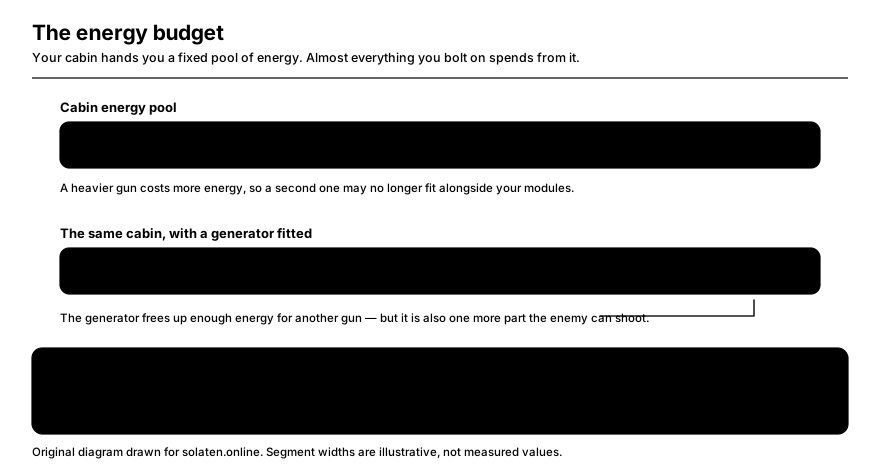
Weapons and most hardware draw on the cabin's energy. Once it is gone, it is gone — free space and spare tonnage will not help you. Work out what the build is for before you allocate: a vehicle with one well-supported weapon and a cooler is a coherent thing; a vehicle with two weapons and nothing to support them is usually worse than either.
Generators cut both ways
A generator buys you energy, and it is also a part that can be destroyed. If it goes, the parts it was powering stop working. Ask yourself what your vehicle still does after the generator is gone. If the answer is “drive around”, rethink the build.
Match movement parts to the weight you actually built
Movement parts set your tonnage and your mass limit, and they behave very differently from one another. Wheels are forgiving. Tracks spread damage but are slow. Hovers and legs have handling models of their own that take real practice. Whatever you pick, fit enough of them for the mass you have assembled — an overloaded vehicle is a stationary target in an objective mode.
Place parts as if someone is going to shoot them, because they are
Damage is local. Individual parts are destroyed individually. This single fact should drive most of your layout decisions.
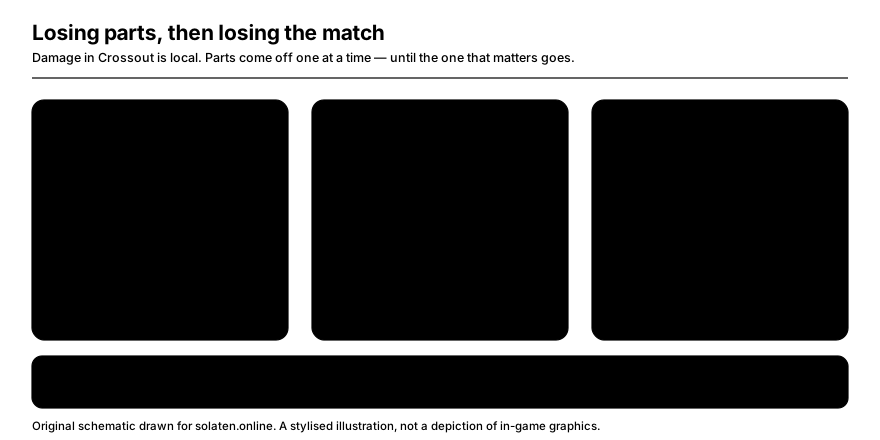
- Recess the weapons. Structural parts on either side of a gun cost almost nothing and turn a clean side-shot into a wasted one.
- Do not stack everything on the roof. Height is exposure.
- Spread your movement parts. Losing one wheel out of six is an inconvenience; losing one out of four can be the end of the match.
- Look at the front view. Rotate the build in the garage and ask what is visible from where the enemy will be.
Try this in the garage
The garage is free to use and you can rebuild endlessly without spending anything. The link goes to the official Crossout website.
Open the official Crossout sitePartner linkAdvertising. If you create an account through this link, the publisher of this site may earn a commission. It costs you nothing extra and it does not change what is written here.Keep power score in mind the whole time
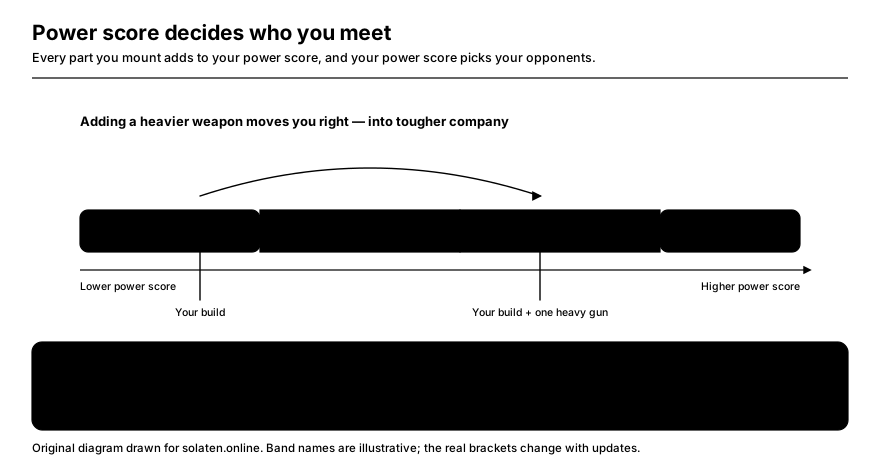
Every part you add raises your power score, and power score picks your opponents. A build that is 20% stronger but sits a bracket higher can easily be a net loss. Efficiency — getting the most capability per point of power score — is a genuine skill, and it is the thing that separates a comfortable first month from a miserable one.
A sane first build
- Pick a cabin you can afford and read its three numbers.
Energy, tonnage, mass limit.
- Mount one weapon you can fully power.
Leave headroom rather than filling the pool to the last point.
- Add movement parts until the mass is comfortably under the limit.
Not exactly at it.
- Fill the remaining space with structural parts.
Especially around the weapon and in front of the cabin.
- Take it into a raid, not a PvP mission.
Find out what breaks first when nothing is on the line.
We have deliberately not named specific parts. Part availability, balance and cost all change with updates, and a named shopping list is the fastest way for a guide to become wrong. The principles above have held across years of patches; the part names have not.
Written by Margaret Cook, responsible editor for solaten.online, published by DKA tours, s.r.o.. Published 25 September 2026. Where this page and the game's publisher disagree, the publisher's own information prevails. Corrections: info@solaten.online.